


Frameworks and Models That Bring Clarity to Complex CRM Decisions
 Frameworks and models exist to make complex decisions simpler, repeatable, and defensible — and ultimately better.
For executives, they reduce reliance on individual judgement alone and replace ambiguity with shared structure, language, and decision discipline.
When used well, models provide clarity on what matters, when it matters, and where attention should be focused as complexity increases.
The frameworks and models we use are designed specifically for CRM and Power Platform environments, where delivery pressure, organisational change, and competing priorities often collide. They help leaders see patterns early, assess risk realistically, and make deliberate trade-offs rather than reactive adjustments. The result is calmer governance, more consistent decisions, and platforms that evolve with intent — not by accident.
Clarity should feel shared. Not improvised.
If CRM decisions still rely on guesswork

Designed to bring clarity to complex CRM decisions, these frameworks and models provide structured ways to think about CRM strategy, governance, implementation, delivery, and long-term adoption. They support leaders and program teams navigating Dynamics 365 and Power Platform environments where technology, organisational change, and accountability intersect.
Making complex CRM decisions easier
CRM decisions, although superficially easy, are rarely simple — and they are rarely owned by one person.
Our frameworks help organisations:
- Create shared language
- Make trade-offs visible
- Navigate complexity with confidence
- Stay aligned as conditions change
They are used as guides, not rigid rules.
SuccessRM

A whole-of-CRM view of success
SuccessRM is Opsis’ holistic view of what drives sustainable CRM outcomes.
It recognises that CRM success depends on alignment across:
- Strategy
- Governance
- Capability
- Adoption
- Technology
SuccessRM helps organisations identify where imbalance exists — and where attention will have the greatest impact.
The Nine D’s of CRM Success
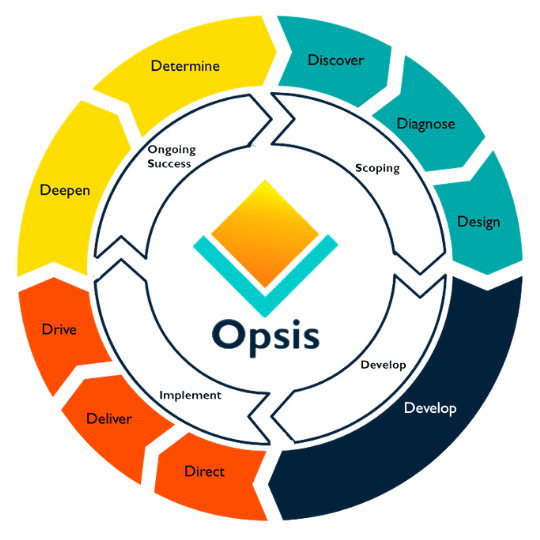 The decisions that shape outcomes
The Nine D’s of CRM Success represent the critical decisions that consistently shape CRM outcomes.
They are used to:
- Structure executive conversations
- Diagnose stalled or struggling programs
- Create clarity across leadership and delivery teams
Rather than focusing on tasks or features, the Nine D’s focus on decision quality.
Governance by Design

Governance that supports progress
Governance by Design reframes governance as an enabler, not a constraint.
It focuses on:
- Clear ownership and decision rights
- Proportionate controls
- Early involvement — not after-the-fact escalation
- Governance that evolves as complexity grows
This approach helps organisations maintain momentum while staying in control.